

Table of Contents
- What to Do Immediately When Your Dirt Bike Arrives Damaged
- How to Document Freight Damage: A Step-by-Step Evidence Checklist
- Distinguishing Between Shipping Damage and Manufacturing Defects
- Contacting the Seller and Freight Carrier
- Filing a Dirt Bike Shipping Damage Claim
- Understanding Your Consumer Rights and Return Policy
- Common Mistakes to Avoid When Dealing With Damaged Delivery
-
Escalation Roadmap: When to Escalate Your Claim
- Step 1: Carrier Customer Service Manager (Days 1-30)
- Step 2: Carrier Legal Department (Days 31-60)
- Step 3: Federal Motor Carrier Safety Administration Complaint (Days 61-90)
- Step 4: Credit Card Chargeback (Days 1-180)
- Step 5: Small Claims Court (Days 90+)
- Step 6: Civil Court and Attorney Representation (High-Value Claims)
- Timeline Summary: Know When to Move Forward
- Frequently Asked Questions
Last Updated: October 4, 2026
What to Do Immediately When Your Dirt Bike Arrives Damaged
When your dirt bike arrives damaged, the first hours matter most. Don't sign off on delivery yet, your immediate actions determine whether you can file a successful claim.
Stop unpacking immediately. Photograph the box exterior (tears, dents, water damage), then the interior before touching anything. This sequence proves damage occurred in transit, not after delivery.
Contact the seller or carrier within 24 hours, most require reports within 48-72 hours. Have photos and your order number ready.
How to Document Freight Damage: A Step-by-Step Evidence Checklist
Proper documentation transforms disputes into provable claims. Show the box arrived damaged, contents are damaged, and you're not at fault.
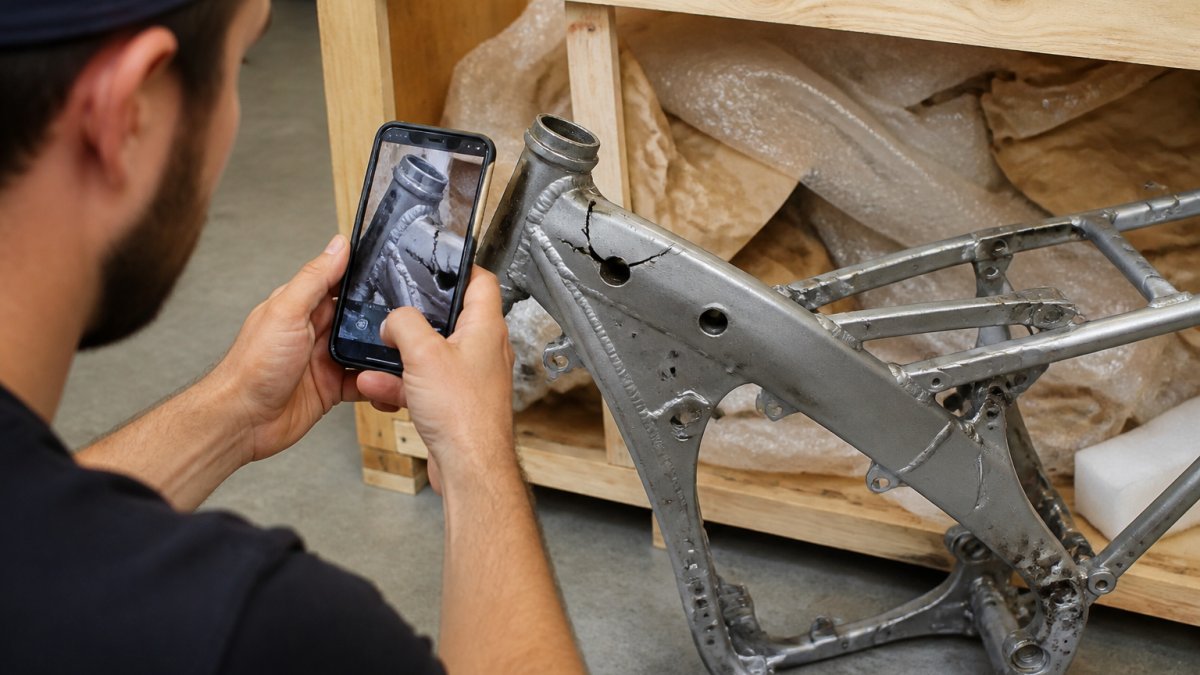
Photographing and Recording Damage
Photograph from multiple angles: wide shots of overall condition, close-ups of each damaged area, shipping label, and impact marks on the crate.
Use your phone's timestamp or photograph today's date next to the item. Use natural daylight to avoid shadows hiding details.
Record a video walkthrough narrating damage as you unpack: "The crate has this dent," "The frame has a crack here." Video is powerful evidence showing the sequence of damage.
| Documentation Step | What to Capture | Why It Matters |
|---|---|---|
| Exterior inspection | Crate damage, tears, water stains | Proves damage occurred in transit |
| Unboxing video | Real-time discovery of damage | Shows you didn't cause it |
| Close-up photos | Specific cracks, dents, bent parts | Supports insurance claim |
| Timestamp proof | Date and time of discovery | Establishes when damage was found |
| Packing material condition | Crushed foam, broken straps | Indicates shipping failure |
Preserving the Shipping Materials
Don't discard the crate, foam, or packing materials, they're critical evidence. Photograph them before removal. Damaged foam or broken straps prove carrier failure.
Store materials for at least 30 days. The carrier may request photos or inspection access.
Take a photo of the bill of lading (the shipping label on the box). This document proves who shipped it, when, and which carrier handled it. It's your roadmap for filing claims because it shows exactly who to contact first.
Distinguishing Between Shipping Damage and Manufacturing Defects
Not all damage is the carrier's fault. A bent frame from a crash during shipping looks different from a manufacturing defect. Understanding the difference shapes your claim strategy.
Ask: Would this damage occur if the bike fell during transport? If yes, it's shipping damage. Hairline cracks in welds or misaligned components suggest manufacturing defects.
For manufacturing defects, contact the seller for warranty replacement. For shipping damage, file a claim with the freight carrier listed on the bill of lading.
Contacting the Seller and Freight Carrier
Call the seller first with your order number, delivery date, and damage description. Email a summary with photos.
The seller will handle the claim or direct you to the carrier. If directed to the carrier, request their claim number and contact information.
The 'Sign-Off' Trap: Why You Should Never Accept Delivery Without Inspection
Most people lose claims here. Signing without inspection legally accepts the goods "in good condition."
Never sign immediately. Inspect contents first. If the driver insists, write "RECEIVED DAMAGED" on the receipt, sign, and photograph it. This flags damage at delivery.
If the driver won't wait, refuse delivery and ask them to note it on the manifest. This notifies the carrier immediately.
Filing a Dirt Bike Shipping Damage Claim
File a claim with the freight carrier using their online portal. Provide: bill of lading number, photos of box and bike, damage description, purchase price, and proof of payment. Be specific about repair or replacement costs.
The carrier will investigate and may request additional photos or inspection access. Claims typically take 30-60 days.
Freight Carrier vs. Dealer Liability: Understanding Who Pays
Liability depends on who contracted with the carrier. If the seller arranged shipping, they file the claim. If you arranged it, you file.
Check your order confirmation to see who paid for shipping, that entity typically holds insurance and files claims.
If the seller arranged shipping, provide photos and documentation for them to file.
If the seller refuses to help and you didn't arrange shipping, contact the carrier anyway. They may file a claim against the seller.
Understanding Your Consumer Rights and Return Policy
Most states require sellers to deliver goods in promised condition. Arriving damaged violates that promise.
Check the seller's return policy. Many retailers offer returns or replacements for damaged goods within 30 days.
If both refuse, file a chargeback with your credit card company. Most issuers reverse charges for damaged goods in 30-60 days if documentation is strong.
MotoTec Mud Kids Electric 48v 1000w Go Kart Full Suspension Green →
For major purchases, file a complaint with your state's consumer protection office, they investigate unfair practices and pressure sellers to resolve disputes.
Common Mistakes to Avoid When Dealing With Damaged Delivery
The biggest mistake is signing without inspecting. The second is discarding evidence. Don't discard the crate, foam, or materials until your claim resolves.
Avoid admitting fault in writing. Don't speculate about cause. Stick to facts: "The bike arrived with a cracked frame" or "The crate showed impact damage."
File within 48-72 hours of delivery. Waiting weakens credibility and may disqualify you.
Avoid partial refunds without exploring full replacement. If damage is beyond simple repair, push for replacement.
Escalation Roadmap: When to Escalate Your Claim
If the carrier denies your claim or ignores requests, escalate. Each step has specific timelines and success rates.
Step 1: Carrier Customer Service Manager (Days 1-30)
If denied or silent for 14+ days, request a manager. Provide: claim number, one-page summary of why denial is wrong, clear damage photo, and your demand (replacement, refund, or repair cost). Set a 7-day deadline. Success rate: 40-50%.
Step 2: Carrier Legal Department (Days 31-60)
Send a certified letter to the legal department including: claim number, damage photos, bill of lading, communication timeline, and demand with 14-day deadline. State you'll file FMCSA complaint and pursue legal action if unresolved. Success rate: 50-60%.
Step 3: Federal Motor Carrier Safety Administration Complaint (Days 61-90)
File at safetydata.fmcsa.dot.gov or 1-888-368-7238. Provide: carrier name and DOT number, claim number, damage description, photos, and correspondence. FMCSA contacts the carrier; multiple complaints trigger audits and fines. Processing: 30-60 days. Success rate: 60-70%.
Step 4: Credit Card Chargeback (Days 1-180)
File after the carrier denies your claim or ignores you 30+ days. Call your card company requesting chargeback for "Goods Not Received as Described." Provide order number, amount, and brief explanation. Submit photos, bill of lading, and correspondence. Card issuer investigates 30-60 days.
Success rates: 70-80% with photos and bill of lading; 85-90% with unboxing video; 80%+ if carrier has chargeback history; 20-30% without documentation. File within 120-180 days of purchase.
Step 5: Small Claims Court (Days 90+)
If chargeback fails or amount exceeds liability cap, use small claims court (handles disputes up to $5,000-$10,000 depending on state).
When to file:
- The carrier has denied your claim in writing
- You have exhausted all other remedies (manager, legal department, FMCSA complaint)
- The damage amount is within your state's small claims limit
- You have strong documentation (photos, bill of lading, written correspondence)
What to bring:
- Your damage photos (printed and organized by date)
- The bill of lading
- Copies of all emails and letters to the carrier
- The carrier's denial letter
- Proof of payment (credit card statement or invoice)
- An estimate of repair costs (get a quote from a local dirt bike shop)
Filing process:
- Go to your county's small claims court website or visit the courthouse.
- File a claim against the carrier, naming the carrier's legal entity (e.g., "YRC Worldwide, Inc.").
- Pay the filing fee (typically $50-$200 depending on the claim amount).
- Serve the carrier with the claim (the court will provide instructions).
- Attend the hearing (usually 30-60 days after filing).
What to expect in court:
Present your case clearly: "I purchased a dirt bike for $2,800.
Show your photos and the bill of lading. Most judges will rule in your favor if the evidence is clear.
Success rate: 70-80% if you have strong documentation and the carrier doesn't appear. 50-60% if the carrier sends a representative.
Collecting the judgment: If you win, the carrier must pay within 30 days.
Step 6: Civil Court and Attorney Representation (High-Value Claims)
For bikes worth more than $10,000 or if the damage claim exceeds your state's small claims limit, consult a personal injury or contract attorney. Many offer free consultations.
What to expect:
- The attorney will review your case and estimate your chances of winning.
- If they take the case, they typically work on contingency (taking 25-40% of the settlement).
- They will file a formal lawsuit in civil court.
- The carrier will likely settle before trial to avoid legal fees and bad publicity.
When to hire an attorney:
- The damage exceeds $10,000
- The carrier is a major company with a history of fighting claims
- You have strong evidence and a clear liability case
- The carrier has ignored your FMCSA complaint
Timeline Summary: Know When to Move Forward
| Days | Action | Success Rate | Next Step If Failed |
|---|---|---|---|
| 1-14 | File claim with carrier | 80%+ | Manager escalation |
| 15-30 | Manager escalation | 40-50% | Legal department letter |
| 31-60 | Legal department letter | 50-60% | FMCSA complaint |
| 1-180 | Credit card chargeback | 70-90% | Small claims court |
| 90+ | Small claims court | 70-80% | Civil court + attorney |
Frequently Asked Questions
What should I do if my dirt bike arrives damaged?
Stop immediately and do not sign the delivery receipt. Document all visible damage with photographs and video before moving the bike. Contact the freight carrier within 24 hours to file a claim, and notify the seller the same day. Keep the shipping materials, crate, and all packing intact until the carrier inspects them. This evidence is critical for your shipping damage claim.
How do I document freight damage properly for a claim?
Take time-stamped photos and video of the crate exterior first, then open carefully and photograph interior damage. Capture close-ups of cracks, dents, bent components, and broken parts from multiple angles. Save the bill of lading and delivery receipt. Write a detailed description of each damaged area with measurements if possible. Do not attempt repairs before the carrier inspects the damage, as this can void your claim.
How long do I have to report damage after delivery?
Most freight carriers require damage claims within 15 days of delivery. Some policies allow up to 30 days if hidden damage is discovered later. Report damage to the carrier in writing as soon as you discover it, and keep copies of all correspondence. Delaying your report weakens your claim and may result in denial, so act immediately upon discovery.
Who is responsible for shipping damage: the freight carrier or the seller?
Liability depends on the shipping method and insurance coverage. The freight carrier is responsible for damage during transit if the shipment was properly packaged. The seller is responsible if packaging was inadequate. Most sellers use shipping insurance to cover damage claims. Your claim goes to the carrier first, then to the seller's insurance if needed. Document everything to establish clear liability.
0 comments