

Last Updated: November 7, 2026
Quick Summary
The right dirt bike for beginners depends on how much repair risk you can absorb: buy new for warranty coverage and no hidden history, or buy used for lower upfront cost if you can inspect it properly. A well-maintained used bike can be a bargain, while a neglected one can cost more than new within a season.
- Set a purchase budget and a separate maintenance budget; if you cannot afford both, buy smaller.
- Insist the engine is cold at inspection, since a warm engine can mask starting problems.
- A 49cc to 50cc two-stroke or a 110cc four-stroke covers most beginners.
- New bikes include warranty coverage and dealer support; used bikes bought privately come with neither.
- Beginners who keep receipts and a simple service log recover more at resale.
Table of Contents
- New vs Used Dirt Bike for Beginners: The Core Trade-Offs
- The Best Dirt Bike for Beginners: Sizing, Power, and Budget
- Your Used Dirt Bike Buying Checklist
- Used Dirt Bike Maintenance Costs: What to Budget
- New Dirt Bike Warranty and Financing Explained
- Total Cost of Ownership: New vs Used for a Beginner
- Which Beginner Bike Fits You? A Decision Framework
- Shop Beginner Dirt Bikes at SalePriced
- Frequently Asked Questions
New vs Used Dirt Bike for Beginners: The Core Trade-Offs
The used dirt bike market was valued at $4.60 billion in 2024 and is forecast to reach $10.75 billion by 2033 (Custom Market Insights used dirt bike market report).
The real split comes down to two things: upfront cost and what you can verify about the machine.
Upfront Price and Depreciation
New costs full retail on day one, and value drops the moment it leaves the dealer. Used bikes have already absorbed that first depreciation hit.
Reliability and Mechanical History
A new bike has no unknown service history. A used bike is only as good as its service history.
Flemington Powersports' beginner buying guide makes the point that used bikes cost less initially, but those savings can evaporate once repairs enter the picture. That is the honest version.
The Best Dirt Bike for Beginners: Sizing, Power, and Budget
Sizing comes first. Seat height and rider fit matter more than engine size for a first bike.
Power comes second. A 49cc to 50cc two-stroke is a genuine starter machine.
Budget is the third leg. Set a purchase budget and a separate maintenance budget. If you cannot afford both, buy smaller.
For families who want a concrete starting point, the MotoTec X2 110cc 4-Stroke Gas Dirt Bike gives taller beginners a 110cc four-stroke with an adjustable speed limiter, and the Mototec Hooligan 60cc 4-Stroke Gas Dirt Bike offers a smaller-displacement option for riders stepping up gradually.

Your Used Dirt Bike Buying Checklist
A used dirt bike buying checklist is a pre-purchase inspection sequence: verify the cold start, listen for engine noise, check for oil leaks, test the suspension, inspect the chain and sprockets, and look for frame damage before any money changes hands. Skip any step and you are gambling.
Before You Leave Home
Ask the seller for the VIN and a photo of the title or certificate of origin before you drive out. Confirm the seller's name matches the paperwork before you pay.
Bring a flashlight, a clean rag, a small magnet (for frame and bodywork checks), a tire-pressure gauge, and a compression tester if you have one.
Step 1: Cold Start
Insist the engine is cold when you arrive, since a warm engine can mask starting problems.
Watch out: a bike that only starts with starter fluid is hiding a fuel-delivery or compression problem that will cost you money on day one.
Step 2: Engine Noise and Compression
With the engine idling, listen for knocking from the bottom end and rattling from the top end. A light tick is often normal valve train noise on a four-stroke; a deep knock is not.
Step 3: Oil and Fluid Leaks
Look at the engine cases, fork seals, shock shaft, and underside of the frame. A light oil film on a fork stanchion means a weeping seal; a drip means it needs service. Check the air filter box for dirt past the filter, which indicates the engine has been breathing grit.
Step 4: Suspension
Compress the forks and rear shock slowly and listen for clicking or grinding. Check the stanchions for scratches and the shock shaft for pitting; either will tear new seals. Bounce the bike and watch for smooth return without stiction. On a used beginner bike, worn suspension is common and not a dealbreaker, but it is a negotiating point.
Step 5: Chain, Sprockets, and Bearings
Worn sprocket teeth hook forward like a shark fin, and a chain that lifts more than half a link off the rear sprocket is stretched. Check wheel bearings by grabbing the tire at 12 and 6 o'clock and rocking it; any play means new bearings. Check steering head bearings by holding the front brake and rocking the bike forward and back; a clunk means adjustment or replacement.
Step 6: Frame and Chassis Damage
Run your hand along the frame rails and look for cracks, fresh paint over welds, and bent mounts. Use the magnet: it sticks to steel but not to body filler or aluminum, so a magnet that falls off a steel frame rail can reveal a repaired crack.
Step 7: Wear Items and Service Records
Check tires for cracking and remaining tread, brake pads for thickness, and grips for wear. Ask for receipts for oil changes, top-end work, and suspension service. No records means assume nothing was done and price the bike accordingly. A seller who keeps a simple logbook is a better risk than one who says "it was all done, trust me."
Step 8: Paperwork and Payment
Confirm the title or certificate of origin is in the seller's name, the VIN on the frame matches the paperwork, and there are no liens.
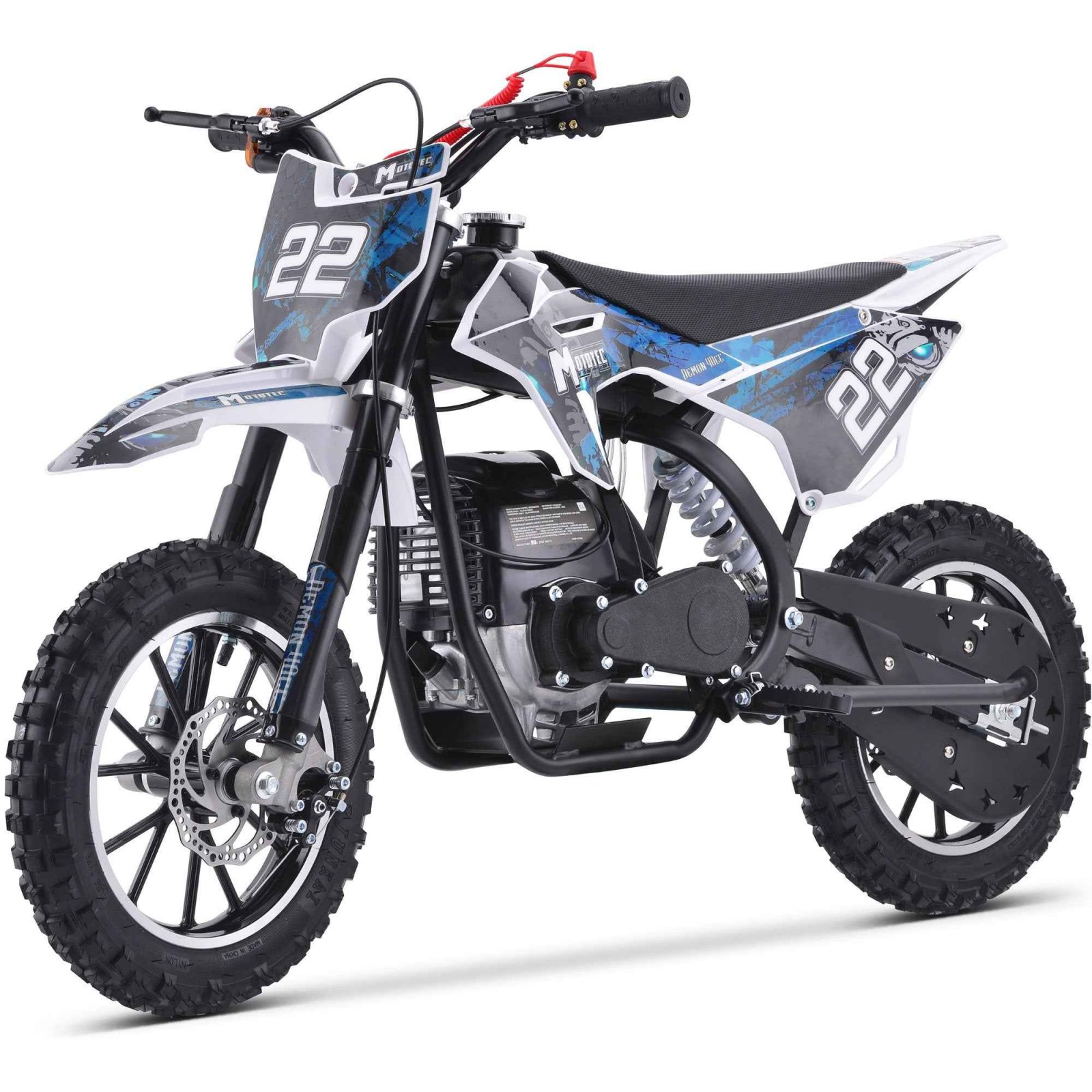
If any step fails, you have three options: walk away, negotiate the repair cost off the price, or buy only if you can do the work yourself. For a beginner, walking away from a bike with a questionable cold start or no paperwork is almost always the right call.
Used Dirt Bike Maintenance Costs: What to Budget
Used dirt bike maintenance costs run higher than most first-time buyers expect, because a used machine usually arrives needing something.
Two-strokes are simpler and cheaper to rebuild but burn premix oil with every tank.
The honest rule: set aside a repair fund equal to a meaningful fraction of the purchase price.
New Dirt Bike Warranty and Financing Explained
A new dirt bike warranty is the clearest advantage new has over used. New bikes come with coverage, dealer support, and current safety updates.
Moto United La Habra's new bike guidance lists warranty coverage and the latest updates among the reasons to choose new, and that is not marketing fluff.
Financing changes the math too.
For a deeper look at what new-bike coverage actually includes, read our breakdown of the benefits of buying new dirt bikes.
Total Cost of Ownership: New vs Used for a Beginner
Total cost of ownership is purchase price plus maintenance, repairs, insurance, and resale value, minus what you recover when you sell. That full picture is where the new vs used dirt bike for beginners argument gets settled. Most comparisons stop at the sticker price; the table and walkthrough below add the first-year costs that actually decide whether a beginner comes out ahead.
The Costs Competitors Leave Out
A beginner's first year includes more than the bike. Protective gear is not optional: a helmet, goggles, gloves, boots, and a chest protector typically run several hundred dollars even at entry level. Transport matters too, a hitch carrier, a small trailer, or a friend's truck. Registration and off-road permits vary by state; check your state's off-highway vehicle rules before you budget.
First-Year Cost Comparison
The figures below are general planning ranges, not quotes. They assume a beginner-sized bike, light recreational use, and a rider who does basic maintenance. Your numbers will vary with model, terrain, and how hard the bike is ridden.
| Cost Factor | New Bike | Used Bike |
|---|---|---|
| Purchase price | Higher (full retail) | Lower (already depreciated) |
| Protective gear (helmet, goggles, gloves, boots, chest protector) | Several hundred dollars | Several hundred dollars |
| Transport (hitch carrier or trailer) | Same for both | Same for both |
| Registration / off-road permit | Varies by state | Varies by state |
| First-year maintenance (oil, filters, chain lube, tires) | Predictable, low | Condition-dependent, often higher |
| Repair fund | Small | Set aside a meaningful fraction of purchase price |
| Warranty coverage | Included | Rarely included |
| Depreciation in year one | Steepest early | Already absorbed |
| Resale value | Predictable | Condition-dependent |
What the Numbers Mean in Practice
A new bike costs more upfront and less in surprises; a used bike costs less upfront and more in uncertainty. The break-even point depends on how much repair risk the used bike carries. If it needs a top-end rebuild, new tires, and a chain and sprocket set in year one, those costs can erase much of the savings.
Resale and the Two-Year View
A new bike's resale value is predictable because you know its history; a used bike's value depends on condition, model year, and whether you can prove maintenance.
Beginners who cannot absorb a surprise repair should weight the table toward new. Beginners with a trusted mechanic or the skills to do their own work can capture the used-bike savings without the downside.
Which Beginner Bike Fits You? A Decision Framework
Use this framework to decide in under five minutes.
- Buy new if: you want warranty coverage, you cannot inspect a used bike confidently, the rider is young or lightweight, or a surprise repair would strain your budget.
- Buy used if: you can inspect the bike properly or bring someone who can, you accept repair risk, and the savings are large enough to fund a repair fund.
- Buy smaller than you think: a 49cc to 50cc two-stroke or a 110cc four-stroke covers most beginners.
If the rider is a teenager and you are weighing electric against gas, our guide to electric dirt bikes for teenagers covers the trade-offs before you commit.
Shop Beginner Dirt Bikes at SalePriced
The new vs used dirt bike for beginners decision comes down to how much uncertainty you can absorb. If you want a machine with no hidden history, warranty coverage, and a known service life, new is the safer buy.
The hardest part of buying a first dirt bike is not picking a color. It is deciding how much risk you want to carry.
Frequently Asked Questions
Is it better to buy a used or new dirt bike for a beginner?
It depends on your budget and tolerance for risk. A used dirt bike lowers the upfront cost and takes the sting out of drop damage during the learning curve, but you inherit unknown mechanical history and no warranty. A new dirt bike for beginners like the MotoTec Pioneer 49cc costs $329 and includes a 30-day parts replacement warranty, plus you know exactly how it has been treated from day one.
What size dirt bike is right for a beginner?
Match engine size and seat height to the rider, not the other way around. Young riders around age 13 often start on a 49cc to 50cc bike such as the MotoTec Pioneer or Alien, both rated for riders up to 130 lbs. Older or heavier beginners can step up to a 110cc model like the MotoTec X1, which has a 37 mph top speed. Sit on the bike: both feet should reach the ground.
What should I check before buying a used dirt bike?
Start with a cold start: the engine should fire without extended cranking. Listen for unusual engine noise, look for oil leaks under the cases, and check the suspension for smooth travel without clicks. Inspect the chain and sprockets for worn teeth, the frame for cracks or bends, and the tires for sidewall damage. Ask for the service history and model year, and confirm the seller has a title or bill of sale before you pay.
Are used dirt bikes reliable for beginners?
A well-inspected used dirt bike can be reliable, but the risk sits in what you cannot see. The savings on a used bike can evaporate once repairs are factored in, so budget for maintenance from the start. If you cannot inspect the bike in person or verify its service history, a new bike with warranty coverage is the safer first purchase for a beginner rider.
How much should a beginner spend on a dirt bike?
Set a total budget, not just a purchase price. New beginner bikes at SalePriced start at $329 for the MotoTec Pioneer 49cc and $349 for the Alien 50cc, while the 110cc MotoTec X1 is $899. Add safety gear, fuel, and a maintenance reserve. If you buy used, set aside a repair fund for replacement parts and the first service.

0 comments