

Last Updated: November 1, 2026
Quick Summary
Electric go karts are worth it for kids who ride on pavement or smooth ground and whose parents want quiet, low-maintenance fun. Gas models suit larger riding areas and families willing to handle fuel and engine upkeep.
- Electric karts are quieter and skip oil changes, carburetor cleaning and fuel runs.
- The 48v 1000w model lists 10 and 20 mph speeds and a recommended age of 13 and up.
- Runtime depends on rider weight, terrain, hills and speed setting, so real range can fall well below listed figures.
- Listed electric models carry a recommended age of 13 and up, so check with the manufacturer before buying for a younger child.
- All listed models carry a 60-day parts replacement warranty.
Table of Contents
- Electric vs. Gas Go-Karts: The Core Trade-Offs
- Kids' Go-Kart Safety: Speed Limits, Seat Belts and Supervision
- Matching Kart Size and Power to Your Child's Age and Height
- Kids' Go-Kart Battery Life and Real Runtime
- Best Electric Go-Kart for a 10-Year-Old: Our Picks Compared
- Total Cost of Ownership: Purchase, Charging, Maintenance and Warranty
- Deciding Whether an Electric Kart Is Right for Your Family
- Frequently Asked Questions
Electric vs. Gas Go-Karts: The Core Trade-Offs
Electric go karts are worth it for kids who ride on pavement or smooth ground and whose parents want quiet, low-maintenance fun.
The core trade-off is simple. Electric karts are quieter and skip oil changes, carburetor cleaning and fuel runs. Our guide to keeping a gas kart in good running order covers the routine upkeep these engines need.
Gas karts also bring a regulatory question. Our guide whether gas go karts are EPA compliant walks through how emissions rules apply to these engines. Most gas powered models sold for kids carry EPA and CARB approval for their engines, and EPA small off-road engine emissions rules explains how those standards apply.
Quick Picks:
- Best for a backyard or driveway: an electric kart, given quiet operation and no fuel
- Best for open land and rough terrain: a gas kart, given more power and the ability to refuel quickly
- Best for a shared family kart: the MotoTec Mud XL 60v 2000w, which seats two
Kids' Go-Kart Safety: Speed Limits, Seat Belts and Supervision
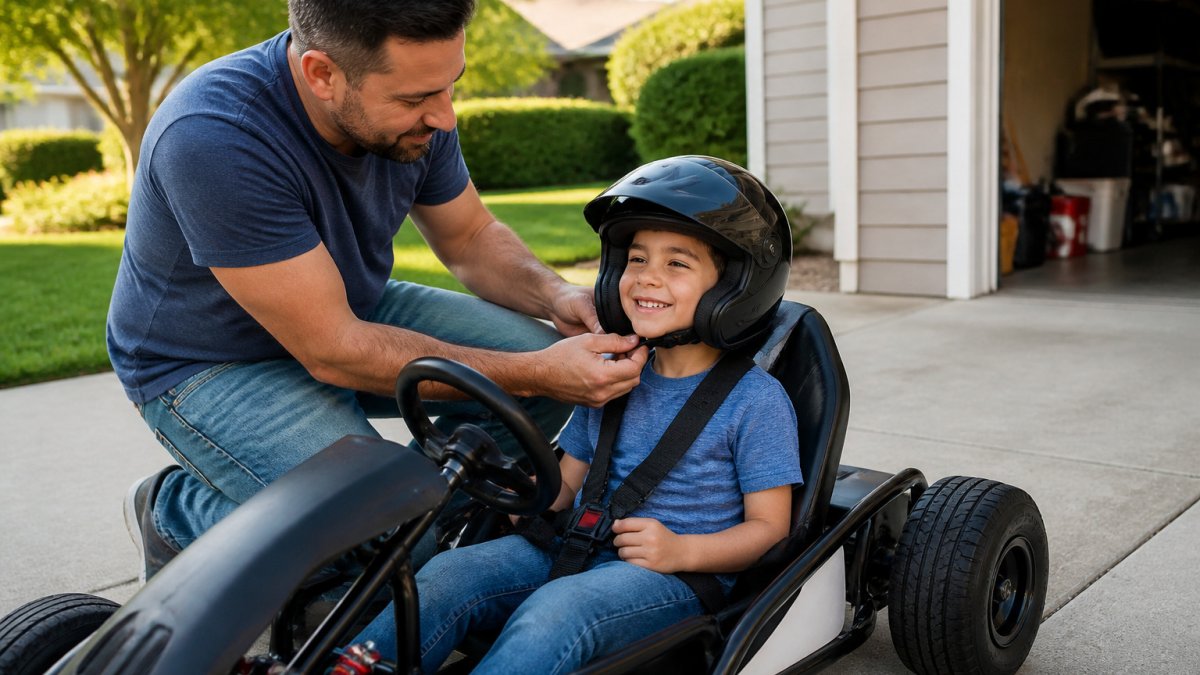
The karts listed in our catalog include a seat belt, roll bar and kill switch, and the manufacturer calls for a helmet and adult supervision. Those features matter, but they only work when the kart is matched to the rider and the riding area.
Speed Control and Selectable Settings
Speed is where most parents should start. The MotoTec Mud 48v 1000w offers 10 mph and 20 mph selectable speeds, with the top setting depending on rider weight. The MotoTec Mud XL 60v 2000w reaches 25 mph and offers 10, 20 and 25 mph settings. Begin every new rider on the lowest setting and move up only after they handle turns and stops confidently.
Protective Gear and Adult Supervision
Each listing calls for a helmet and safety gear on every ride, and adult supervision is required. A helmet and safety gear should be worn on every ride, and adult supervision is required.
Matching Kart Size and Power to Your Child's Age and Height
Fit matters more than most buyers expect. The MotoTec Mud 48v 1000w lists a recommended age of 13 and up, a rider height of 47 to 63 inches and a maximum rider weight of 150 lbs.
Check height first, then weight, then age. For a broader checklist, see what to look for when buying a first go-kart for kids.
Kids' Go-Kart Battery Life and Real Runtime
Manufacturer range figures are a starting point, not a promise. The 48v 1000w model lists 5 to 20 miles per charge depending on weight and terrain. The MotoTec Mud XL 60v 2000w lists 1 to 2.5 hours of runtime and up to 10 hours to recharge a fully drained battery. Those ranges are wide because runtime is not a fixed number, it is the product of several variables a parent can actually control.
What Actually Changes Runtime
- Rider weight. A heavier rider draws more current to hold the same speed, which is why the 48v model ranges from 5 to 20 miles.
- Terrain and surface. Pavement and packed gravel let the kart roll with less motor effort; grass, loose dirt, sand and mulch increase rolling resistance and cut range noticeably. This is why the Reddit rider in r/gokarts warned against non-pavement surfaces.
- Hills and slopes. Climbing draws far more current than flat cruising, so a sloped yard delivers shorter runtime than a flat driveway of the same size.
Planning a Ride Around the Battery
Before a party or long afternoon, start with a full charge and plan the first rides on flat pavement at the lower speed setting.
For the 60v two-seater, the 10-hour recharge time is the real constraint.
Battery Lifespan and Replacement
The 48v model lists four 12v/12ah sealed lead-acid batteries, and the 60v model lists a 60v/20ah SLA battery. Check replacement availability before you buy.
Charging Logistics Parents Overlook
- Confirm the charger voltage and plug type match a standard household outlet; most kid karts charge from a wall outlet, not a special station.
- Charging is not instant, the 60v model's 10-hour figure means an overnight charge, so plan around it.
A kart that fits the rider, runs on smooth ground and gets charged after every session will deliver close to its listed runtime. A kart pushed onto grass, up hills, in cold weather and run flat will not.
Best Electric Go-Kart for a 10-Year-Old: Our Picks Compared
The electric karts in our catalog list a recommended age of 13 and up, so a 10-year-old is below the listed range. Check with the manufacturer before buying for a younger rider.
| Model | Price | Motor | Top Speed | Listed Age | Listed Rider Height | Best For |
|---|---|---|---|---|---|---|
| MotoTec Mud Kids Electric 48v 1000w (Green) | $1,229.00 | 48v 1000w electric | 10 or 20 mph | 13 and up | 47 to 63 inches | Backyard and driveway use, one rider |
| MotoTec Mud XL 60v 2000w (Blue or Red) | $2,029.00 | 60v 2000w electric | 25 mph | 13 and up | Up to 67 inches | Two-seat fun, larger riders |
| MotoTec Mud Gas 98cc (Green or Blue) | $1,149.00 | 98cc 4-stroke gas | Up to 25 mph | Listed for kids, rider height 47 to 63 inches | 47 to 63 inches | Open land, longer runs |
The 48v 1000w electric model
MotoTec Mud Kids Electric 48v 1000w Go Kart Full Suspension Green →
- Pros: Quiet, no fuel, selectable 10 and 20 mph speeds, seat belt and roll bar included
- Cons: Recommended age is 13 and up, range varies widely with terrain and weight
- Best for: a 13-year-old or older rider who wants a quiet kart for a driveway or flat yard
The 60v 2000w electric model
- Pros: Two-seat design, 25 mph top speed, up to 2.5 hours of runtime per charge
- Cons: Heavy at 320 lbs, long 10-hour recharge, a lot of power for a new rider
- Best for: families sharing a larger, faster kart with a teen
The 98cc gas models
- Pros: EPA and CARB approved engine, quick refueling, rugged for open ground
- Cons: Requires fuel and maintenance, louder than electric
- Best for: riders who want to run on open land and do not mind upkeep
Total Cost of Ownership: Purchase, Charging, Maintenance and Warranty
Sticker price is the smallest part of the decision. A $1,229.00 electric kart and a $1,149.00 gas kart look close on the tag, but they diverge sharply once you add up several seasons of ownership.
Purchase Price
At SalePriced, the 48v 1000w electric lists at $1,229.00, the 60v 2000w two-seater at $2,029.00, and the 98cc gas kart at $1,149.00. The gas kart is the cheapest entry point, but that is the only category where it wins.
Fuel Versus Electricity
A 98cc four-stroke kart burns gasoline, and the cost depends on how often it runs and how hard it is driven. Over a season of regular weekend use, fuel savings favor electric, but the gap is modest and does not by itself justify the purchase.
Maintenance and Repairs
This is where the two drivetrains separate. A gas kart needs engine oil changes, spark plug replacement, air filter cleaning, carburetor attention and fresh fuel; skipped maintenance shows up as poor running or a no-start. An electric kart has no oil, spark plug, carburetor or fuel system to service, its wear items are tires, brakes and the battery. , which is the quiet reason many parents find electric simpler to own.
Battery Replacement
Electric ownership has one cost gas does not: eventual battery replacement. Packs lose capacity over hundreds of charge cycles, with the first noticeable runtime drop typically after a couple of seasons. Treat replacement as a planned cost, and confirm before buying that replacements are easy to source.
Protective Gear
Budget for gear on top of the kart regardless of drivetrain: a properly fitted helmet, closed-toe shoes and gloves at minimum. Gear is a per-rider cost, and it applies whether the kart is electric or gas. Do not let gear eat into the kart budget after the fact, price it in from the start.
Resale Value
Gas and electric karts both hold some resale value, but condition drives it more than drivetrain. A well-maintained kart with a healthy battery or a clean engine sells faster than a neglected one. Keep receipts, follow the maintenance schedule and store the kart out of the weather.
Warranty
All listed models carry a 60-day parts replacement warranty. Read how that warranty applies before you buy.
A Simple Way to Compare
For each kart you are considering, add up purchase price, a season of fuel or electricity, expected maintenance, one planned battery replacement (electric) or a season of engine service (gas), gear for each rider, and estimated resale value at the end. The kart with the lower total is the better value, and that number is rarely the one on the tag.
Deciding Whether an Electric Kart Is Right for Your Family
Electric go karts listed by SalePriced are recommended for riders aged 13 and up, and suit smooth ground and riders who value quiet operation. Our guide to the best go karts for birthday parties shows which models work well for group events.
Start with three questions: How old and how tall is the rider? Where will the kart run? How much upkeep are you willing to do? A flat yard, a teen rider and little appetite for engine work point to an electric model; open land and frequent long runs point to gas.
Check the listed age, height and weight for each model before you order.
Frequently Asked Questions
Is go-karting safe for children?
Go-karting can be safe for children when the kart matches their age, height and weight, and when they wear a helmet and protective gear. Adult supervision is required, according to the manufacturer warnings on the MotoTec listings. Look for a seat belt, roll bar and kill switch, and keep riding to surfaces the kart is built for. The MotoTec Mud Kids Electric 48v 1000w and Mud XL 60v 2000w offer selectable speed settings.
What age is appropriate for a kids' electric go-kart?
The MotoTec Mud Kids Electric 48v 1000w Go Kart lists a recommended age of 13 and up, with a maximum rider weight of 150 lbs and a rider height of 47 to 63 inches. The MotoTec Mud XL 60v 2000w models are also listed for riders 13 and up, with a maximum rider weight of 400 lbs. Check the specific listing against your child's height and weight before buying, because age guidance alone does not guarantee a proper fit.
How long does a kids' electric go-kart battery last?
Runtime depends on rider weight, terrain and speed. The MotoTec Mud Kids Electric 48v 1000w lists a distance per charge of 5 to 20 miles, while the MotoTec Mud XL 60v 2000w lists a run time of 1 to 2.5 hours per charge. Full recharge can take up to 10 hours for the XL model if the battery is fully drained. Riding at the higher speed setting or with a heavier rider will shorten runtime.
Are electric or gas go-karts better for kids?
The MotoTec Mud Gas 98cc delivers a 2.5 HP engine with speeds up to 25 mph and a quick pull start, and it requires fuel. The MotoTec Mud Kids Electric 48v 1000w and Mud XL 60v 2000w offer selectable speed settings. The better choice depends on the child's experience and the riding area.

0 comments