

Table of Contents
- Why Pocket Bikes Build Riding Confidence and Motorcycle Fundamentals
- Electric vs Gas Pocket Bikes for Kids: Which Teaches Better Skill
- Understanding Engine Displacement and Two-Stroke vs Four-Stroke Power
- How to Teach a Child to Ride a Pocket Bike: Throttle Control and Steering Basics
- Youth Pocket Bike Safety Gear: What Your Child Actually Needs
- Top Beginner Pocket Bikes: Comparison and Selection
- Age, Weight, and Seat Height: Matching Rider to Bike
- Maintenance Tips for Non-Mechanics: Keep Your Pocket Bike Running
- Frequently Asked Questions
Last Updated: October 2, 2026
Why Pocket Bikes Build Riding Confidence and Motorcycle Fundamentals
A beginner pocket bike is a scaled-down motorcycle engineered to teach core riding skills without the intimidation factor of full-size machines. These compact vehicles teach throttle control, steering geometry, and balance, the three pillars of motorcycle riding, in a controlled, lower-risk environment.
Quick Picks:
- Best Overall: MotoTec 36v Electric Pocket Bike GT, zero maintenance, consistent power delivery for pure skill focus
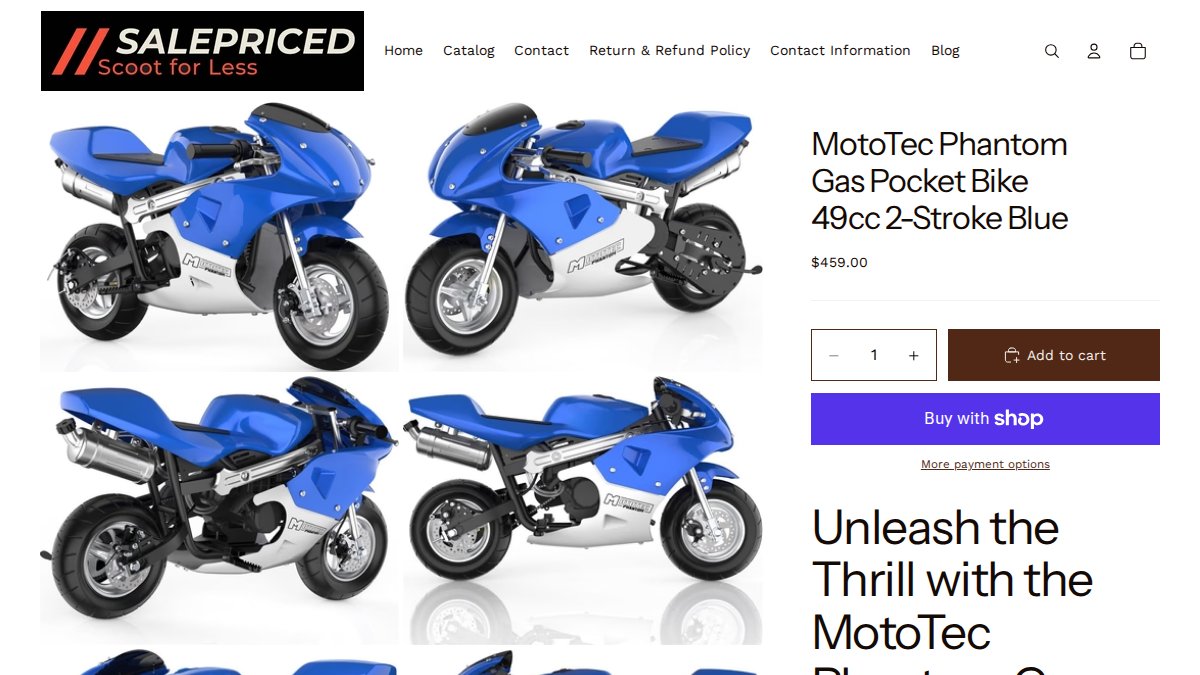
- Best for Performance Learning: MotoTec Phantom 49cc Gas Pocket Bike, two-stroke engine teaches fuel mixture awareness and throttle responsiveness
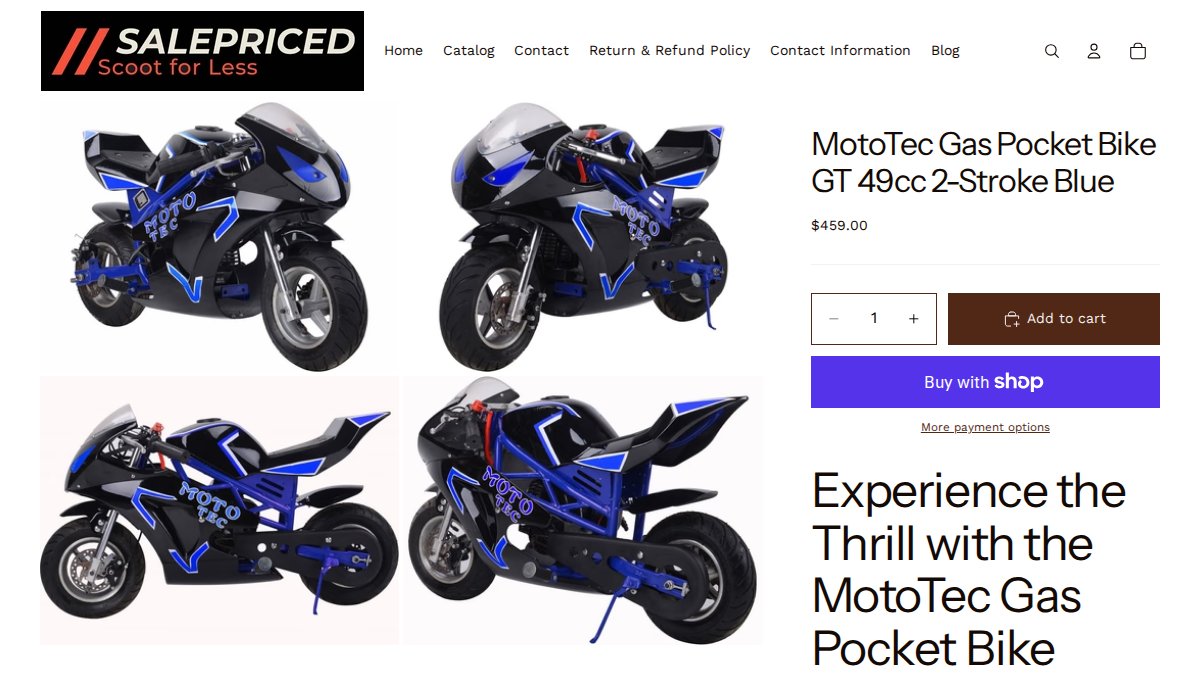
- Best Track-Ready Option: MotoTec Gas Pocket Bike GT 49cc, balanced design suited for competitive closed-course riding
Electric vs Gas Pocket Bikes for Kids: Which Teaches Better Skill
The choice between electric and gas pocket bikes isn't about which is "better", it's about what you're teaching.

| Aspect | Electric | Gas (Two-Stroke) |
|---|---|---|
| Throttle Learning | Smooth, forgiving | Responsive, demanding |
| Maintenance Focus | Battery care only | Fuel mix, spark plugs, clutch |
| Power Delivery | Consistent 20 MPH | Nearly double four-stroke power |
| Best For | Pure skill development | Mechanical understanding |
| Ride Duration | 4-6 hour charge cycle | Up to 20 miles per tank |
Understanding Engine Displacement and Two-Stroke vs Four-Stroke Power
Engine displacement, measured in cubic centimeters (cc), determines how much air and fuel the engine can compress and combust in one cycle. A 49cc engine delivers genuine performance in a pocket bike's lightweight frame.
What cc Rating Means for Beginner Riders
The 49cc rating on MotoTec gas pocket bikes is the sweet spot for beginner pocket bikes: enough power to feel responsive without being uncontrollable. Riders aged 13 and up with a maximum weight capacity of 170 lbs can manage the acceleration and braking demands. Lower displacement feels sluggish; higher displacement overwhelms new riders.
Two-Stroke Engines: More Power, Faster Learning Curve
Two-stroke engines fire once per crankshaft revolution versus once every two for four-strokes, producing nearly double the power (Numerical Study on High-Load Performance of a Two-Stage Boosted Poppet-Valved Two-stroke...). The MotoTec Phantom and MotoTec Gas Pocket Bike GT use EPA-approved two-stroke engines. The tradeoff is complexity: two-stroke engines require precise fuel mixture ratios.

How to Teach a Child to Ride a Pocket Bike: Throttle Control and Steering Basics
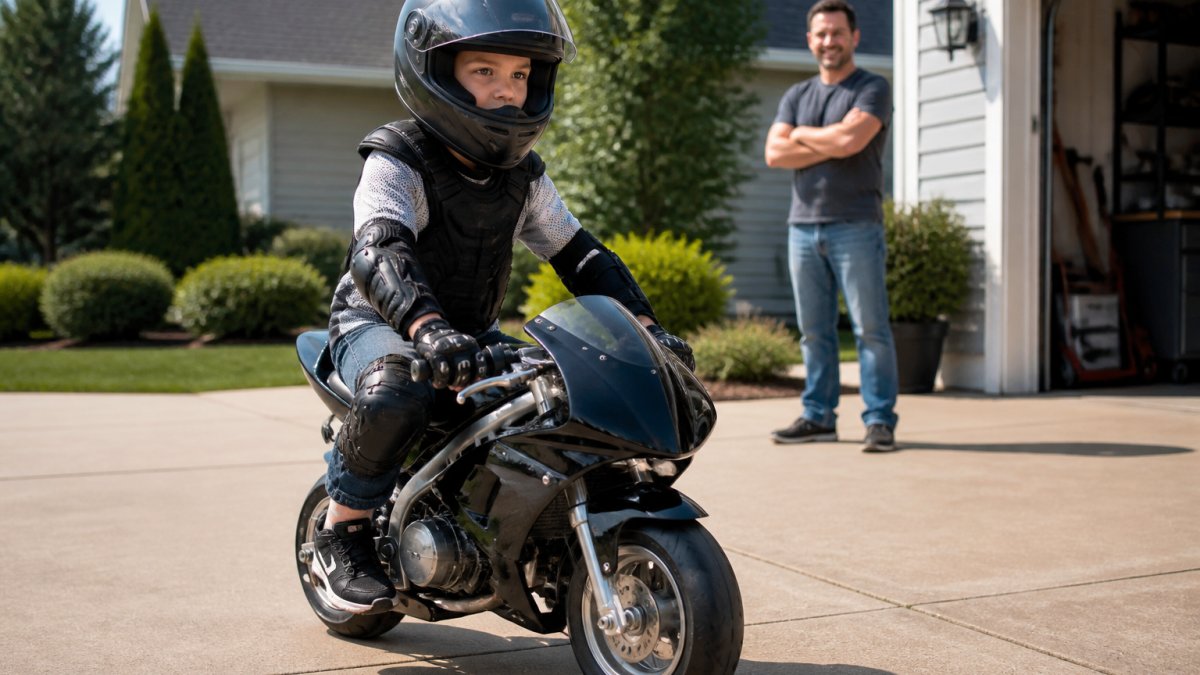
Teaching a child to ride a pocket bike is a progression. The first 30 minutes focus on stationary fundamentals: grip, posture, and throttle feel. The next 2-3 sessions build steering geometry and balance at low speeds. Only after these foundations are solid should a young rider attempt speed or varied terrain.
Starting with Throttle Control and Clutch Operation
Begin with the engine off and have the rider practice twisting the throttle grip smoothly from closed to full open. Smooth throttle modulation is the most important skill to develop first. For gas models, explain how the centrifugal clutch engages as RPM rises. Start moving at 10% throttle and spend 15-20 minutes at this stage, focusing on comfort with the throttle.
Mastering Steering Geometry and Balance
Introduce gentle steering at slow speed. Motorcycle steering is counterintuitive: turning right requires a small left-hand push on the handlebar. Have the rider navigate around cones at 5-10 MPH, focusing on smooth handlebar inputs with body weight centered. After 3-4 sessions, introduce gentle speed increases to 15 MPH. Moving to speed too quickly develops poor habits; patience in the first sessions saves weeks of retraining.
Youth Pocket Bike Safety Gear: What Your Child Actually Needs
Pocket bikes reach 20 MPH, fast enough to cause serious injury in a crash. Safety gear isn't optional; it's the difference between a scraped knee and a hospital visit.
Full-Face Helmet and Protective Padding Requirements
A full-face helmet is non-negotiable; it prevents catastrophic facial injury at 20 MPH. Look for DOT or Snell certification. A helmet should sit level on the head with no more than one finger's width of space between the helmet and forehead.
Safety Gear Sizing Guide for Young Riders
Helmet sizing matters: measure head circumference and match to manufacturer charts. Wrist guards should allow full wrist motion; elbow and knee pads should stay in place. Motorcycle gloves have reinforced palms and knuckle protection. A complete safety setup costs $150-300 and is non-negotiable.
Top Beginner Pocket Bikes: Comparison and Selection
SalePriced offers a focused selection of beginner-grade pocket bikes designed for skill development, not just recreation. Each model serves a specific learning path.
MotoTec 36v 500w Electric Pocket Bike GT Blue →
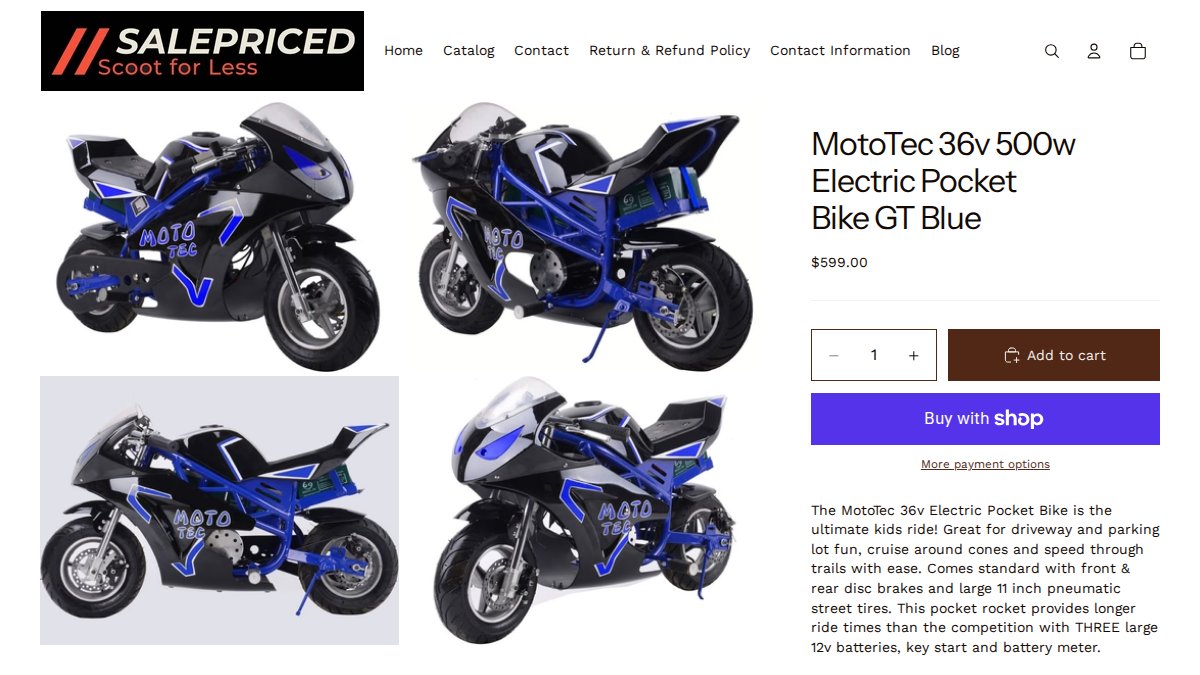
MotoTec 36v Electric Pocket Bike GT: Zero Maintenance, Consistent Power
The MotoTec 36v Electric Pocket Bike GT at $599.00 eliminates maintenance entirely. The 36-volt motor delivers consistent 20 MPH performance. The variable twist-grip throttle teaches smooth modulation. Front and rear disc brakes provide reliable stopping power. The 18-inch seat height fits riders aged 13+ up to 170 lbs.
MotoTec Phantom 49cc Gas Pocket Bike: Two-Stroke Performance for Skill Building
The MotoTec Phantom 49cc Gas Pocket Bike at $459.00 is built for riders ready to learn mechanical responsibility. The 49cc two-stroke engine delivers responsive throttle feel. The 20-mile cruising range per tank supports extended practice sessions. Recommended for ages 13+, max rider weight 170 lbs.
MotoTec Gas Pocket Bike GT 49cc: Balanced Engine and Track-Ready Design
The MotoTec Gas Pocket Bike GT 49cc at $459.00 delivers two-stroke performance with a design optimized for track riding. The GT frame geometry and 11-inch pneumatic tires are engineered for controlled cornering on closed courses. The adjustable handlebars allow customization for different rider heights. Mastering these ergonomic adjustments provides the stability necessary to practice fundamental dirt bike riding drills that translate directly to improved track proficiency.
| Model | Starting Price | Engine Type | Best For | Key Differentiator |
|---|---|---|---|---|
| MotoTec 36v Electric | $599.00 | 36v Electric Motor | First-time riders, skill focus | Zero maintenance, silent operation |
| MotoTec Phantom 49cc | $459.00 | 49cc Two-Stroke | Mechanical learners, skill building | Responsive throttle, 20-mile range |
| MotoTec Gas Pocket Bike GT | $459.00 | 49cc Two-Stroke | Competitive track riders | Track-optimized geometry, adjustable bars |
Age, Weight, and Seat Height: Matching Rider to Bike
A bike that's too large forces poor posture and unstable steering; a bike that's too small cramps the rider. All SalePriced beginner pocket bikes recommend ages 13+ with maximum rider weight of 170 lbs. A rider's feet should touch the ground while seated, typically requiring an inseam of 28-32 inches. Exceeding 170 lbs causes sluggish performance and reduced braking power.
Maintenance Tips for Non-Mechanics: Keep Your Pocket Bike Running
Pocket bike maintenance isn't complicated, but it's non-negotiable. A well-maintained bike runs reliably and teaches riders responsibility. A neglected bike develops problems that create dangerous situations.
Spark Plug and Fuel Mixture Basics for Gas Models
Check the spark plug every 10-15 hours of riding. A fouled or worn spark plug causes hard starting, poor acceleration, and misfires. Fuel mixture is critical for two-stroke engines: a typical ratio is 50:1 (50 parts gasoline to 1 part two-stroke oil). Pre-ride ritual: Check fuel level, verify the fuel mixture container is clearly labeled, and inspect the spark plug for obvious damage.
Battery Care and Charging for Electric Pocket Bikes
The MotoTec 36v Electric Pocket Bike GT uses three 12v batteries. Never leave the bike uncharged for more than 2-3 weeks. Charge after every riding session, ideally when the meter shows 30-40% remaining. Use only the included charger and store it in a dry location.
Frequently Asked Questions
What age is appropriate for a child to start riding a beginner pocket bike?
Most beginner pocket bikes are recommended for ages 13 and up, with a maximum rider weight of 170 lbs. Younger children can learn on smaller models with lower top speeds. Always verify the manufacturer's age and weight recommendations before purchase. Seat height should allow the child to touch the ground with their toes when seated, ensuring control and confidence.
Are pocket bikes safe for beginners to learn on?
Yes, pocket bikes are safe for beginners when proper precautions are taken. They feature front and rear disc brakes for reliable stopping power, low seat heights for easy ground contact, and manageable power outputs. The key is wearing complete safety gear, starting on closed courses or driveways, and learning throttle control gradually. All SalePriced pocket bikes meet EPA regulations for gas models and include essential safety features.
What's the difference between electric and gas pocket bikes for skill development?
Electric pocket bikes like the MotoTec 36v offer consistent, predictable power with zero fuel mixture concerns, making them ideal for learning throttle control without mechanical complexity. Gas pocket bikes with two-stroke engines provide more aggressive acceleration and require learning fuel mixture and spark plug maintenance, building broader motorcycle fundamentals. Gas models teach engine management, while electric models focus purely on riding technique and balance.
What youth pocket bike safety gear do I need to buy separately?
A full-face helmet is essential and not included with pocket bikes. You'll also need protective padding for elbows, knees, and wrists, plus sturdy gloves and boots that cover the ankles. Look for gear sized to fit snugly without restricting movement. ASTM-certified helmets and protective equipment designed for motorcycle or skateboarding use meet safety standards. Budget $100-$200 for a complete safety kit to complement your pocket bike purchase.
How do I know if my child is ready for a pocket bike?
Your child should demonstrate balance and coordination on bicycles or scooters first. They should understand basic safety rules, follow instructions, and show patience when learning new skills. Start with throttle control exercises at low speeds in a controlled environment before progressing to higher speeds. If your child can maintain focus during a 15-20 minute practice session and respond to commands, they're likely ready to begin pocket bike training with proper supervision and gear.
0 comments