

Table of Contents
- EPA-Compliant Gas Dirt Bikes: What You Need to Know
- How to Verify EPA Compliance on a Dirt Bike
- Quick Comparison: Engine Size, Speed, and Price
- Gas Dirt Bike Age and Size Guide
- Gas Dirt Bike Safety Gear for Kids
- Gas Dirt Bike Maintenance Checklist
- Where You Can Legally Ride EPA-Approved Dirt Bikes
- Ownership Costs Beyond the Purchase Price
- Frequently Asked Questions
Last Updated: October 7, 2026
EPA-Compliant Gas Dirt Bikes: What You Need to Know
Choosing the right EPA-compliant gas dirt bike for your family means verifying compliance, matching engine size to rider skill, knowing where you can legally ride, and budgeting for maintenance. At SalePriced, we offer EPA-compliant gas dirt bikes that balance performance, safety, and regulatory compliance.
EPA-compliant gas dirt bikes meet federal emissions standards set by the Environmental Protection Agency. These off-road bikes must pass specific tests to reduce pollutants, and the difference between approved and non-compliant models matters legally and environmentally, especially on public lands or in areas with strict emissions rules.
The market for EPA-compliant gas dirt bikes has expanded as families seek reliable machines that meet safety standards without sacrificing performance. Understanding engine displacement, rider age requirements, and legal riding locations will help you choose well.
How to Verify EPA Compliance on a Dirt Bike
Checking EPA compliance is straightforward. The manufacturer should state "EPA-approved" or "EPA-compliant" in the product specifications, on the official product page, or in the documentation that comes with the vehicle.
Request documentation from the seller. Legitimate retailers provide compliance information upfront. Ask for emissions test results or an EPA approval certificate from private sellers; the serial number can sometimes be cross-referenced with EPA records via the manufacturer.
Reputable brands include compliance information in their marketing materials and manuals. If a seller cannot provide clear proof of EPA approval, move on, non-compliant bikes are cheaper upfront but carry legal risks and are banned in many areas.
Quick Comparison: Engine Size, Speed, and Price
| Model | Engine Size | Engine Type | Top Speed | Max Rider Weight | Price | Best For |
|---|---|---|---|---|---|---|
| MotoTec Pioneer 49cc | 49cc | 2-Stroke | 22 mph | 130 lbs | $329 | Young beginners aged 13+ |
| MotoTec Alien 50cc | 50cc | 2-Stroke | 25 mph | 130 lbs | $349 | Beginners wanting more speed |
| MotoTec X1 110cc | 110cc | 4-Stroke | 37 mph | 170 lbs | $899 | Intermediate riders aged 13+ |
| MotoTec X2 110cc | 110cc | 4-Stroke | 45 mph | 170 lbs | $1,099 | Intermediate riders, semi-auto |
| MotoTec X3 125cc | 125cc | 4-Stroke | 47 mph | 185 lbs | $1,299 | Experienced riders |
| MotoTec X5 250cc | 250cc | 4-Stroke | High performance | 260 lbs | $1,999 | Advanced riders aged 16+ |
49cc to 50cc Models for Young Beginners
The MotoTec Pioneer 49cc and MotoTec Alien 50cc are ideal starter bikes for young riders. Their 2-stroke engines deliver responsive acceleration while keeping top speeds manageable, enough power to feel exciting without overwhelming a beginner.

The Pioneer hits 22 mph and the Alien 25 mph. Both support riders up to 130 lbs and feature fully automatic transmissions, twist the throttle and go, no clutch or shifting. The pull-start is simple enough for kids to operate independently.
Durable steel frames and knobby tires provide traction on dirt trails, while front telescopic forks and rear mono-shock suspension absorb bumps for smaller frames. Disc brakes offer reliable stopping power on varied terrain.
110cc Models for Intermediate Riders
The MotoTec X1 and X2 110cc models bridge beginner and advanced riding. These 4-stroke engines generate 6.7 HP for riders aged 13 and up. The X1 reaches 37 mph with automatic transmission; the X2 climbs to 45 mph with semi-automatic control.
The X1 suits riders who want simplicity, electric start and automatic transmission mean a minimal learning curve. The X2 offers more control via semi-automatic shifting without a clutch. Both support riders up to 170 lbs.
At 137 lbs, the MotoTec X2 is light enough for younger teens to handle confidently, and an adjustable speed limiter restricts top speed as skills develop. Both models feature responsive suspension and quality components for serious off-road riding.
The 110cc class is where most intermediate riders spend significant time, powerful enough to stay interesting as skills improve, but not so aggressive that they punish mistakes.
125cc to 250cc Models for Experienced Riders
The MotoTec X3 125cc and X5 250cc are powerful options in the EPA-compliant gas dirt bike range. The X3 generates 8.3 HP and reaches 47 mph; the X5 delivers 16 HP. Both require serious riding skills and physical strength.
The X3 125cc suits experienced intermediate riders. Its 4-speed manual transmission with clutch demands engagement and control, and the chromoly steel frame and advanced suspension handle jumps and rough terrain. At 47 mph, it demands respect and proper safety gear.
The X5 250cc is reserved for advanced riders aged 16 and up. Its 5-speed manual transmission and 16 HP engine require confident throttle control and technical ability. It supports 260 lbs and is designed for riders with months of experience on smaller machines.
Gas Dirt Bike Age and Size Guide
Matching a dirt bike to your rider's age and size prevents frustration and injury. Engine displacement alone doesn't determine suitability, seat height, weight capacity, and power delivery all factor in.
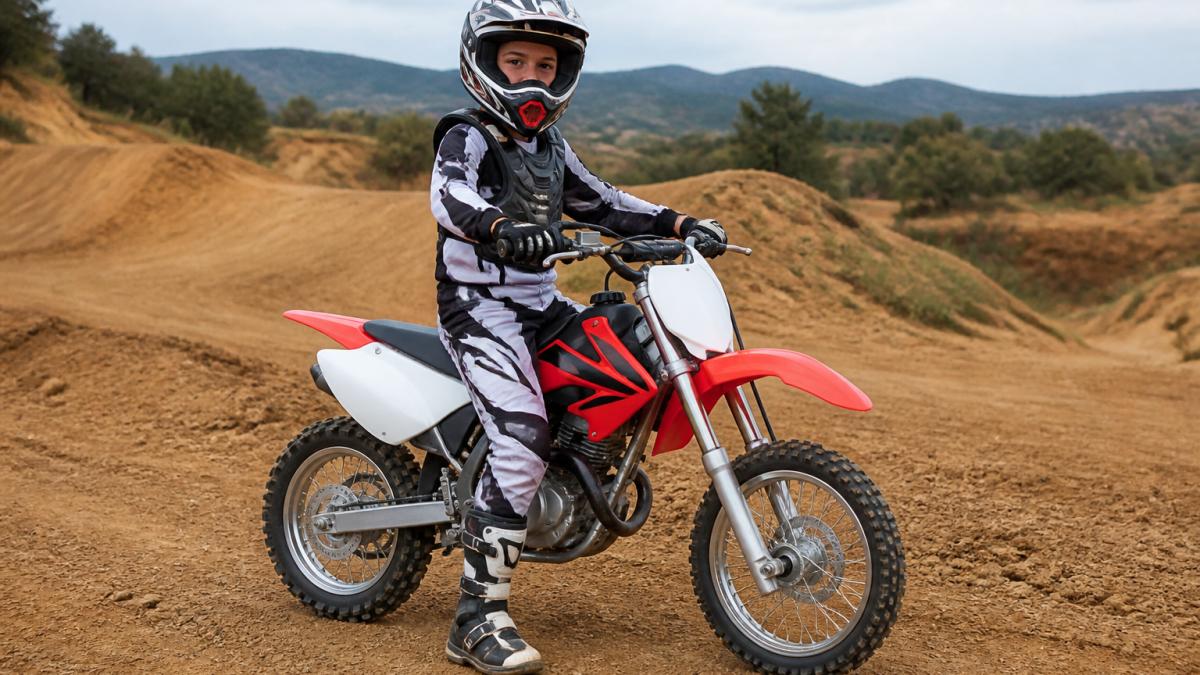
For riders aged 13 to 14, start with 49cc to 50cc models, which have lower seat heights and smaller frames.
Riders aged 15 to 16 typically transition to 110cc models like the MotoTec X1 and X2.

By age 17 and up, experienced riders can handle 125cc and 250cc bikes, though physical size matters more than age, a smaller adult might prefer a 110cc, while a larger 15-year-old might responsibly handle a 125cc.
Weight capacity is non-negotiable, exceeding it compromises handling and braking. The MotoTec Pioneer and Alien support up to 130 lbs, the 110cc models 170 lbs, and the 125cc and 250cc bikes 185 lbs and 260 lbs respectively.
Gas Dirt Bike Safety Gear for Kids
Proper safety gear is mandatory. A helmet is the foundation of protection, full-face designs offer more coverage than open-face, and the helmet should fit snugly without moving when your rider shakes their head.
Reinforced motocross jerseys and pants protect against abrasion; look for padding at the elbows and knees. Gloves protect hands during falls and improve throttle control, while dirt biking boots offer ankle support and grip.
Chest and back protectors add extra safety, not required for casual riding but essential for trail riding or competition. Riders can combine a chest protector with a separate back protector or use an integrated vest.
MotoTec X5 250cc 4-Stroke Gas Dirt Bike Black →
Eye protection matters: goggles keep dust and debris out, improving visibility, and proper goggles seal around the eyes to prevent wind from causing tears.
Gas Dirt Bike Maintenance Checklist
Regular maintenance keeps your EPA-compliant gas dirt bike running reliably and safely. Build a schedule around riding frequency: casual riders should perform basic checks monthly, while frequent riders should check critical items before each ride.
| Maintenance Task | Frequency | Impact |
|---|---|---|
| Check tire pressure and tread | Before each ride | Safety and handling |
| Inspect brakes for wear | Weekly | Stopping power |
| Change engine oil | Every 20-30 hours | Engine longevity |
| Clean or replace air filter | Monthly | Engine performance |
| Check chain tension and lubrication | Weekly | Power delivery |
| Inspect suspension components | Monthly | Ride quality and safety |
| Test all lights and reflectors | Before each ride | Visibility |
| Check fuel system for leaks | Monthly | Safety and EPA compliance |
Oil changes are critical. Use the grade specified in your manual, drain the old oil completely, and replace the filter. Fresh oil keeps the engine clean and extends its life.
Air filter maintenance directly affects performance. A clogged filter reduces power and efficiency. Clean or replace the filter based on riding conditions. Dusty terrain requires more frequent changes.
Chain maintenance prevents breakdowns. Keep the chain properly tensioned and lubricated. A loose chain can slip or break. An over-tight chain strains the engine and suspension.
Inspect brakes regularly. Disc pads wear with use; replace them before they reach the backing plate, which damages the rotor. Properly functioning brakes are essential for safety.
Where You Can Legally Ride EPA-Approved Dirt Bikes
Legal riding locations depend on your local regulations. EPA-compliant gas dirt bikes are approved for off-road use, but not all off-road areas permit them.
National Forests allow off-road riding in designated areas. Check with your local Forest Service office for specific trails open to dirt bikes. Some areas require permits or have seasonal restrictions.
State parks vary widely: some permit EPA-compliant dirt bikes on designated trails, while others ban all motorized vehicles. Contact your state's parks department before planning a ride; many publish detailed regulations online.
Private land is an option with permission.
Local trails and riding areas often have specific rules. Some communities operate official dirt bike parks with designated tracks, providing safe, legal riding environments with proper maintenance and liability insurance.
Never ride on public roads, highways, or areas marked as off-limits. EPA-compliant gas dirt bikes are not street legal. Operating one on public roads violates traffic laws and voids any safety compliance.
Ownership Costs Beyond the Purchase Price
The purchase price is just the beginning. Factor in fuel, maintenance, repairs, safety gear, and storage when budgeting for an EPA-compliant gas dirt bike.
Fuel costs depend on engine size and riding frequency.
Safety gear represents a significant upfront cost. A quality helmet runs $100 to $300. Protective jerseys, pants, gloves, and boots add another $200 to $500.
Maintenance and repairs accumulate: oil changes cost $20 to $50, air filters $15 to $30, and brake pads $30 to $80.
Storage and transportation require planning.
Insurance may be required depending on where you ride, and some facilities require liability coverage.
Replacement parts and upgrades extend the bike's life. Tires, chains, and suspension components eventually wear out. Budget for these replacements as your bike ages.
Finding the right EPA-compliant gas dirt bike means matching engine size to rider skill, verifying compliance documentation, and understanding local regulations. At SalePriced, we offer a full range of EPA-approved models from the MotoTec Pioneer 49cc starter bikes through the powerful X5 250cc for experienced riders. Explore our selection of EPA-compliant gas dirt bikes and join the adventure today.

Frequently Asked Questions
What makes a gas dirt bike EPA-compliant?
EPA-compliant gas dirt bikes meet federal emissions standards set by the Environmental Protection Agency. These bikes use four-stroke or two-stroke engines with upgraded carburetors and emission control systems that reduce harmful pollutants. All EPA-compliant models sold on SalePriced carry official EPA approval certification, meaning they've been tested and verified to meet air quality regulations. This compliance ensures the bike operates cleanly while delivering reliable performance for off-road riding.
How can I verify that a gas dirt bike meets EPA requirements?
Check the product listing for EPA approval certification badges or statements. SalePriced clearly labels all EPA-compliant models in their descriptions. Look for phrases like 'EPA approved' or 'EPA certified' in the specifications. Request documentation from the seller if you're unsure. Legitimate EPA compliance means the manufacturer has submitted the bike for testing and received official approval, not just that it runs cleanly. Never assume a bike is compliant without explicit labeling from the retailer.
What size gas dirt bike is appropriate for a child?
Engine size depends on the rider's age, weight, and experience level. Young beginners aged 13 with lighter weight (under 130 lbs) should start with 49cc to 50cc models, which top out around 22-25 mph. Intermediate riders aged 13+ weighing up to 170 lbs work well with 110cc bikes (37-45 mph). Experienced teens aged 16+ and heavier riders can handle 125cc to 250cc models (47+ mph). Always check the maximum weight capacity and age recommendation on each bike's listing to ensure a proper fit and safe riding experience.
Do EPA-compliant dirt bikes need to be registered?
Registration requirements vary by state and local jurisdiction. Most off-road dirt bikes used only on private property do not require registration. However, if you plan to ride on public land or trails, check with your state's Department of Motor Vehicles or local off-road regulations. Some states classify small-displacement dirt bikes differently than full-size motorcycles. EPA compliance ensures the bike meets emissions standards but does not automatically exempt it from registration, you must verify your local rules before purchasing.
0 comments